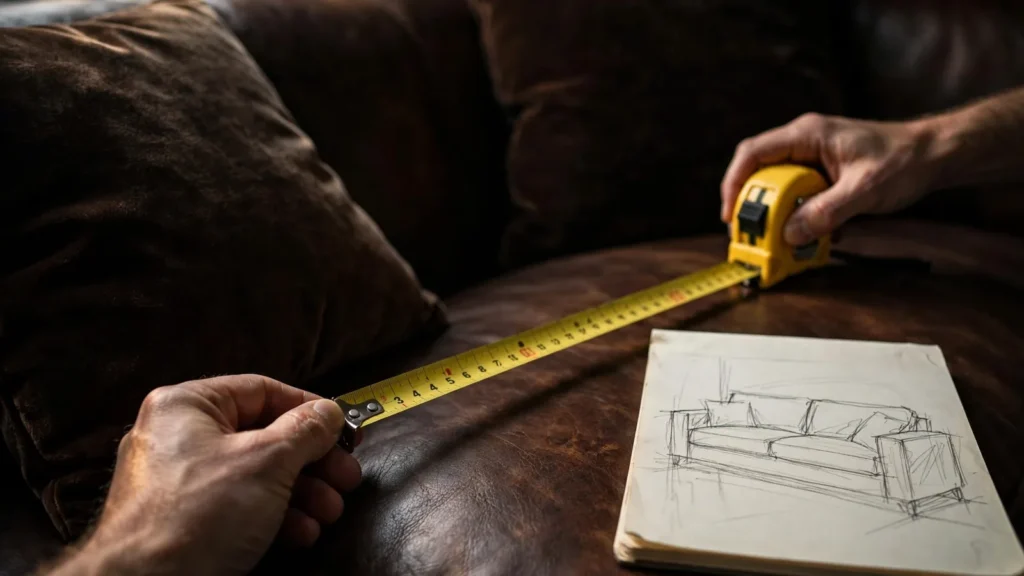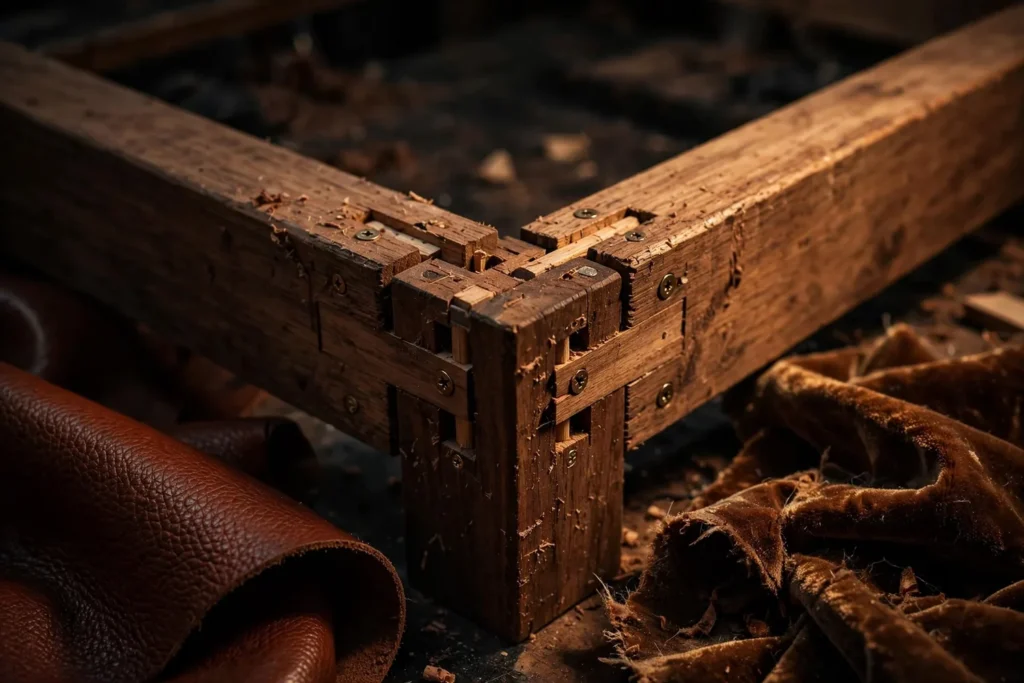
A wobble is never just a wobble. A sofa that creaks, rocks on its legs or dips at one corner is telling you something has let go inside — and the frame is exactly the part worth fixing, because a sound frame is what makes a sofa worth keeping at all. Fabric wears and foam tires, but they are the replaceable layers. The structure is the sofa.
Three systems hold you up
Underneath the upholstery, three systems share the work:
- The frame. On a well-made sofa this is kiln-dried hardwood, with joints glued, dowelled or screwed and reinforced by corner blocks. It carries the whole load and sets the shape.
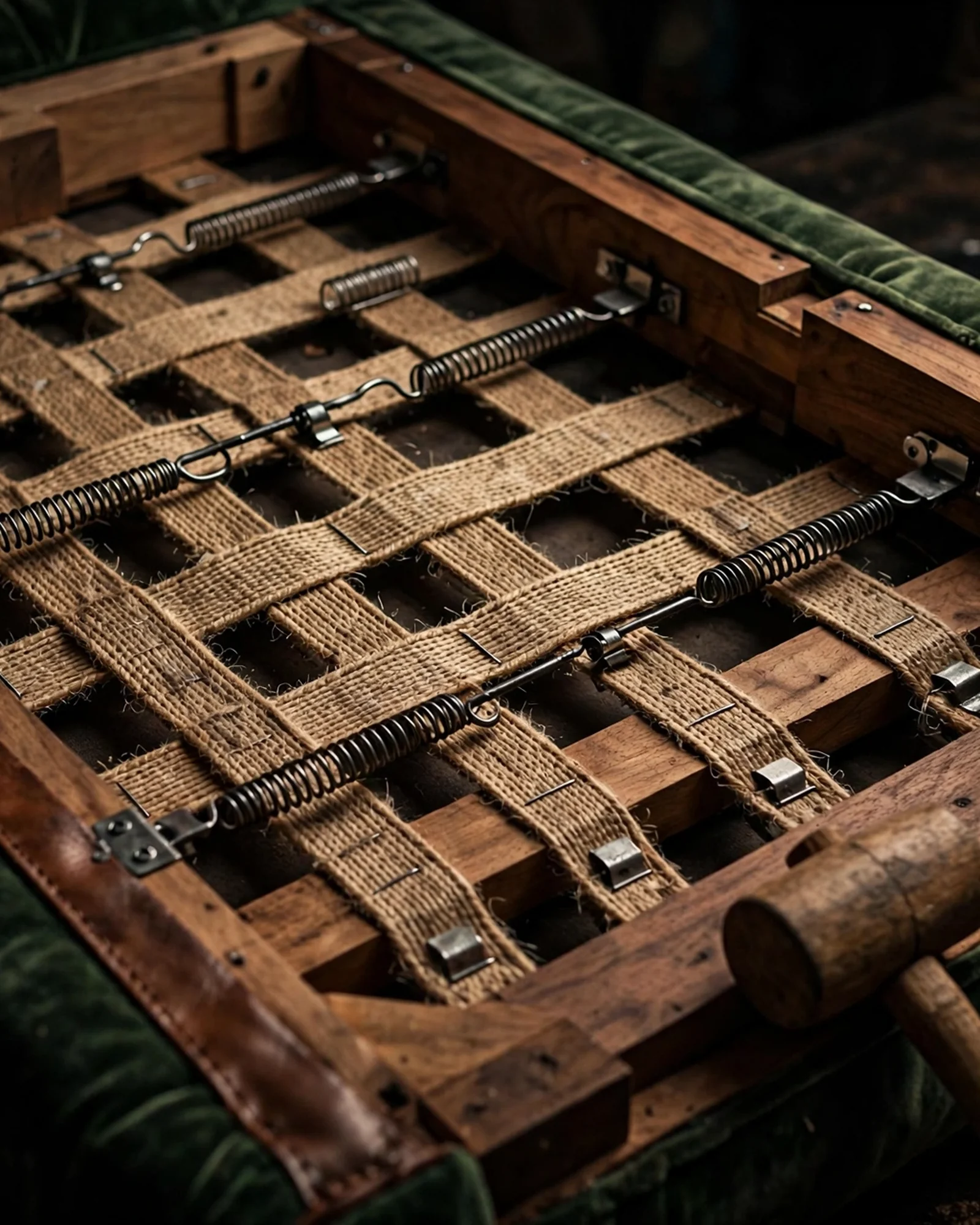
- The springs. Most modern sofas use serpentine springs — flat steel strips that zigzag across the seat, clipped to the rails. Traditional and better-made pieces use coil springs, hand-tied together with twine in an eight-way tie, so the whole seat works as one sprung surface.
- The webbing. Straps stretched across the frame — woven jute on traditional work, elasticated rubber webbing on much modern furniture — that support the springs or the foam above them.
When everything is tight, you never think about any of it. When one part fails, the others take strain they weren’t designed for, which is why a small fault left alone becomes a big one.
What fails, and what it feels like
- A creak or a rock when you sit down usually means a joint has loosened. Glue joints dry out and shrink over the years — air-conditioned rooms speed this up — until the dowels start to move. Left alone, a moving joint wears itself oval and eventually splits the rail.
- A sudden dip in one seat points to a spring: a serpentine spring snapped at the bend, or the clips holding it have pulled out of the rail.
- A seat that sags evenly, like a hammock, with springs intact, is usually perished webbing. Elasticated webbing loses its stretch with age and heat; jute webbing can rot or tear.
- A lumpy, uneven sit often means a mixture: one failed spring clip throwing the load onto its neighbours.
- A cracked leg or rail is the one to act on quickly — a frame that flexes under load is damaging its own joints with every sitting.
How we repair it
Frame and spring repair starts from underneath. The bottom cloth comes off, the faulty sections are stripped back, and the structure can be assessed honestly — no guesswork through the fabric. Loose joints are taken apart, cleaned of old glue, re-glued and re-dowelled, and corner blocks are replaced or added where the maker skimped. Cracked rails are repaired or replaced in matching hardwood. Springs are replaced like for like — same gauge, same profile — with new clips, and coil springs are re-tied so the seat works evenly again. Webbing is renewed at the correct tension, not just patched. Then the whole seat is loaded and listened to: a good repair is silent.
One honest exception: frames built from particleboard and staples can’t take a repair that lasts, because there is nothing solid for new joints to bite into. If yours is one of those, we’ll tell you from your photos before you spend anything on transport.
Upholstery hides the structure, not the problem. Fix the structure and the sofa sits like new; cover over it and you’ll pay twice.
Got a wobble?
Send three photos and tell us where it creaks or dips — a short phone video of the movement helps too. We’ll tell you honestly whether it’s a repair worth doing.
The bottom line
Springs, webbing and joints are all repairable on a frame worth keeping, and a repaired frame is the foundation every other job — new foam, new fabric — depends on. Sort the structure first, and the sofa will feel new long after it looks it.
Got a sofa like this?
Send three photos and we'll tell you honestly what it needs and what it costs.
Free photo quote