Restaurant seating works harder in a month than a home sofa does in a year: hundreds of sittings a week, handbags and keys dragged across it, heels against the base, cleaning chemicals every night and the occasional spilled espresso. Booth seating that survives service isn’t lucky — it’s specified properly in the first place and maintained on a routine, not left alone until it splits.
Specify for the room it will live in
- Fabric rating first. Upholstery fabrics are abrasion-tested on the Martindale scale. Domestic fabrics might be rated at 15,000–25,000 rubs; for heavy restaurant use, look for contract-grade fabrics rated well above that — the higher the number, the longer the cloth stands up to constant sliding in and out.
- Contract vinyl and faux leather earn their place in dining rooms: they wipe clean, shrug off spills and don’t hold stains. Choose a contract grade, though — thin domestic vinyl cracks at the seams and flex points within a season or two.
- Foam matters as much as fabric. High-resilience foam in a firm grade holds its shape under all-day use; soft, low-density foam packs down at the front edge where guests perch, and the seat looks tired long before the cover wears.
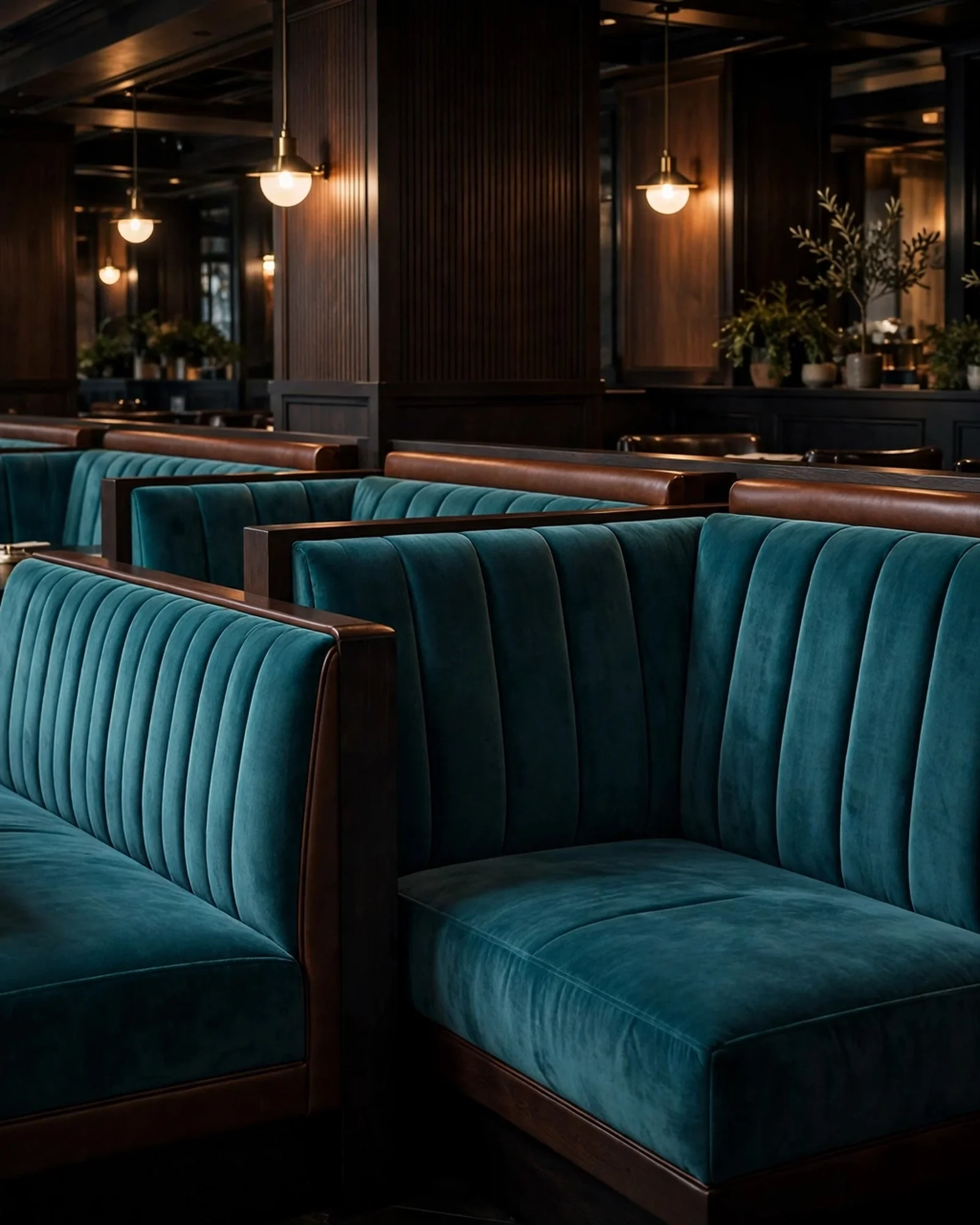
- Seams and detailing. Double-stitched seams, no loose buttons for bags to catch, and fluted or plain backs chosen knowing that deep channels collect crumbs — beautiful, but budget the cleaning time.
- Fire performance. Commercial premises have fire-safety requirements for upholstered furniture; make sure the fabrics and foams specified meet the standard your premises are inspected against.
The maintenance routine
- Daily: wipe down every seat and back, and brush crumbs out of the seams and the gap between seat and back — grit left in a seam works like sandpaper.
- Weekly: check seams, corners and the front edge of each seat for the first small split or loose stitch, and check feet and fixings so nothing rocks.
- On cleaning products: use a pH-neutral cleaner made for the material. Solvent and bleach-based cleaners dry out vinyl until it cracks, and harsh detergents take the finish off fabrics. If it isn’t made for upholstery, it doesn’t go on the booths.
- Repair small tears immediately. A two-centimetre split is a small, cheap repair this week; left through a busy season it becomes torn foam, a sagging seat and a full re-cover. A patch of clear repair tape is a holding measure for days, not a fix.
Repair, re-cover, or replace?
Beneath the covers, a banquette is usually a simple timber carcass, and carcasses last. In most restaurants the right cycle is: repair minor damage as it appears, then re-cover the seats and backs in sections when the fabric’s life is spent — planned in sections so the room keeps trading — while the structure underneath carries on. Full replacement only makes sense when the layout itself changes, or the carcass was cheaply built to begin with. When the time comes, commercial upholstery planned around your service — sections at a time, quiet days, out of hours — keeps the covers new and the doors open.
In a restaurant, your guests inspect the upholstery with their eyes long before they taste anything. Torn vinyl reads as a kitchen you can’t see — fairly or not.
Seating letting the room down?
Send photos of the booths through the contact form — the whole run, plus close-ups of the worst wear — and we’ll set out your options, repair or re-cover.
The bottom line
Specify contract-grade materials, wipe down daily, fix small tears while they’re small, and re-cover in sections when the fabric is done. Do that, and booth seating survives service for years — looking like part of the restaurant’s standards, not an exception to them.
Got a sofa like this?
Send three photos and we'll tell you honestly what it needs and what it costs.
Free photo quote