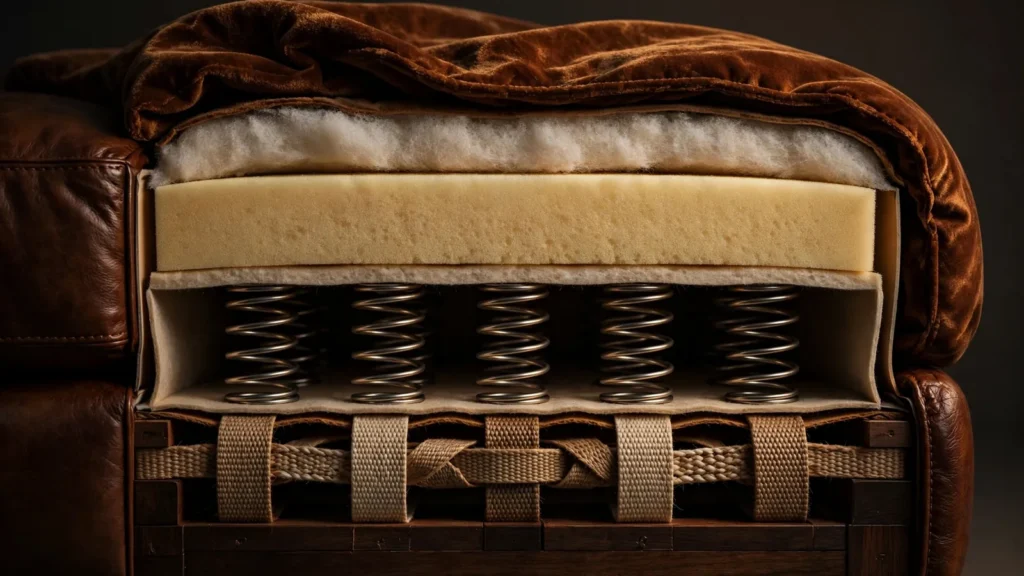
A sofa rarely wears out all at once. It goes at the seat first: you sit down and sink a few centimetres lower than you used to, the front edge rolls you forward, and getting up takes a small push off the arms. Nine times out of ten the frame is sound and the fabric has years left in it — it’s the filling that has given up.
What’s actually gone wrong
Seat foam is a bundle of tiny air cells. Every sitting compresses them, and over the years the cell walls fatigue and crack. The foam loses its resilience: instead of pushing back, it stays dented, and the cushion gets thinner and harder at the same time. Feather and down wraps do something similar — the filling migrates to the edges and compacts in the middle, so you end up sitting in a nest with a ridge under your knees.
Two things are worth checking before blaming the foam. If the seat dips evenly like a hammock but the cushion itself feels springy in your hands, the problem is underneath — webbing or springs, not foam. And if one seat sags while its neighbour doesn’t, compare the cushions side by side: foam fails cushion by cushion, not all at once.
Density is not firmness
This is where most people get caught. Foam is sold on two separate numbers, and they are constantly confused:
- Density (measured in kg/m³) is how much material is in the foam. It decides how long the foam lasts, not how it feels.
- Firmness (measured by indentation load, ILD or IFD) is how the foam feels when you sit on it.
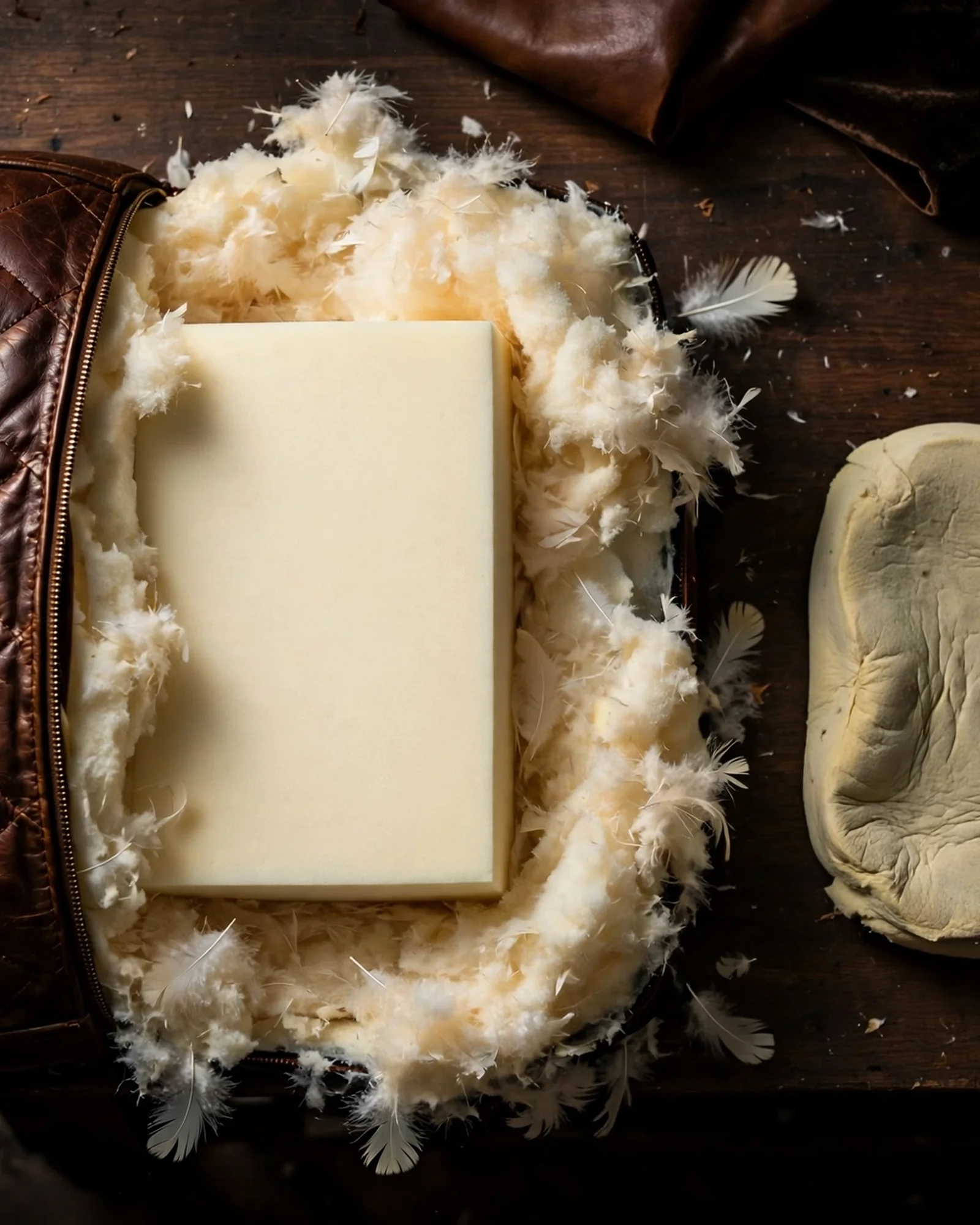
A cheap, low-density foam can be made to feel firm on day one — and be flat within a couple of years, because there simply isn’t enough material to hold its shape. For seat cushions we use high-resilience (HR) foam: a higher-density foam with a livelier spring to it, which keeps its support far longer than standard foam. The firmness is then tuned to the sofa and to you — firmer for a formal, upright sit; softer for a lounge sofa you sink into.
Around the core goes a wrap, and the wrap changes the character of the seat. A polyester fibre (Dacron) wrap softens the first touch, rounds the cushion’s profile and stops the cover wrinkling and chattering against bare foam. A feather wrap gives that broken-in, sink-in luxury feel, at the cost of needing a daily plump. Many of the best seats are a foam core with a feather wrap: support underneath, softness on top.
Choosing the new foam
Back cushions are a different job from seat cushions. Backs take less load, so they are usually refilled rather than rebuilt — hollowfibre for a plump, casual look, feather or a feather blend for something softer and heavier, always filled to the panel sizes of the cover so the cushion stands up instead of slouching. If your seat cushions have zip-off covers in good condition, often only the foam inside needs to change; if the covers are worn or the zips have failed, that’s the moment to talk about cushion and foam replacement together with new covers.
How the rebuild goes
- The old cushion is measured and used as the template — allowing for the compression it has lost, so the new one fills the cover properly.
- New foam is cut to size and shape, including any profiling at the front edge.
- The wrap is fitted and the cushion is dressed in a stockinette undercover, so it slides into the cover without dragging.
- The cover goes back on, the cushion is sat on and checked: height matched across the row, no wrinkling, no ridge.
Most cushion and foam jobs take 3–5 days in the workshop. Seats are always done in matched sets across a sofa — one new cushion beside two tired ones feels stranger than all three tired together.
Good foam pushes back. If your cushion keeps the shape of the last person who sat on it, the foam has retired — the sofa hasn’t.
Sinking seats?
Send three photos — front, side, and one with a cushion off if you can — and we’ll tell you whether foam alone will fix it.
The bottom line
A sagging seat is usually a filling problem, not a sofa problem. Replace the foam properly — right density, right firmness, right wrap — and a sofa you were ready to give up on sits like the day it arrived.
Got a sofa like this?
Send three photos and we'll tell you honestly what it needs and what it costs.
Free photo quote